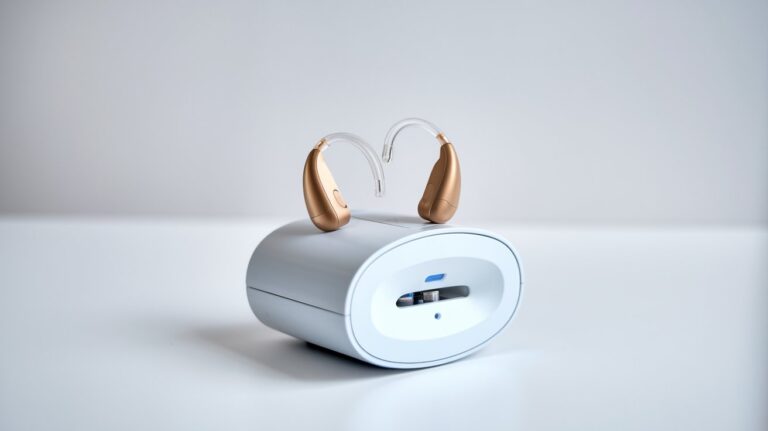
Bluetooth IIC Hearing Aids: Complete 2025 Guide & Best Options
Bluetooth IIC hearing aids represent the pinnacle of invisible hearing aid technology in 2025, combining wireless connectivity with the smallest possible form factor. These invisible-in-canal hearing aids sit deep within your ear canal, making them virtually undetectable while delivering superior sound quality and smartphone connectivity. Modern IIC devices with Bluetooth capabilities offer users the ultimate discretion without sacrificing advanced features.
What Are Bluetooth IIC Hearing Aids?
Bluetooth IIC hearing aids are the smallest hearing aids available that incorporate wireless technology, fitting entirely within the ear canal for maximum discretion. IIC stands for Invisible-in-Canal, indicating these devices sit deeper than traditional hearing aids, making them nearly undetectable to others. The integration of Bluetooth technology allows users to stream audio directly from smartphones, tablets, and other compatible devices without sacrificing the ultra-discreet profile.
These revolutionary devices measure approximately 10-15mm in length and are custom-molded to fit each individual’s ear canal anatomy. The Bluetooth IIC hearing aid technology has advanced significantly in 2024-2025, with manufacturers like Starkey, Phonak, and ReSound developing models that maintain wireless capabilities while preserving the invisible aesthetic that users demand.
Best IIC Hearing Aids with Bluetooth Technology
The market for best IIC hearing aids with Bluetooth has evolved dramatically, with several standout models leading the industry in 2025. These devices successfully merge the smallest possible form factor with advanced wireless connectivity, offering users unprecedented discretion and functionality.
Starkey IIC Hearing Aids with Bluetooth
Starkey leads the market with their Starkey IIC hearing aids featuring proprietary 2.4 GHz wireless technology that enables direct streaming from iOS and Android devices. The Starkey Genesis AI IIC model offers 24-hour battery life, automatic environment detection, and edge-mode processing that adapts to over 700 different listening environments. These devices retail between $2,800-$4,200 per pair in the United States market as of 2025.
Premium Alternative IIC Bluetooth Models
Phonak’s Lyric2 IIC and ReSound’s OMNIA IIC represent competitive alternatives to Starkey’s offerings, both incorporating Bluetooth hearing aid technology in ultra-discreet packages. These models feature advanced noise reduction algorithms, directional microphone systems, and seamless smartphone integration. The Phonak model excels in speech clarity enhancement, while ReSound focuses on natural sound processing and environmental awareness.
IIC Hearing Aid Price Analysis for 2025
The IIC hearing aid price range varies significantly based on technology level, brand, and included features, with Bluetooth-enabled models commanding premium pricing due to their advanced capabilities. Understanding the cost structure helps consumers make informed decisions about their hearing health investment.
Entry-level IIC models without Bluetooth typically cost $1,200-$2,000 per pair, while Bluetooth IIC hearing aids range from $2,500-$5,000 per pair. Premium models with advanced AI processing, multiple program settings, and smartphone apps can exceed $6,000 per pair. Most insurance plans provide partial coverage, with Medicare covering basic models and private insurance often covering 50-80% of costs for medically necessary devices.
Invisible Hearing Aids vs Traditional Models
Invisible hearing aids with Bluetooth offer distinct advantages over traditional behind-the-ear or receiver-in-canal models, particularly for users prioritizing discretion and natural sound quality. The deep canal placement provides acoustic benefits by utilizing the ear’s natural sound collection properties.
Advantages of IIC Design
The primary advantage of invisible-in-canal hearing aids lies in their cosmetic appeal, as they remain virtually undetectable during normal social interactions. The deep canal placement also reduces wind noise, improves directional hearing, and maintains the ear’s natural acoustic properties. Bluetooth connectivity adds wireless streaming capabilities, hands-free calling, and smartphone app control without compromising the discreet profile.
Limitations to Consider
IIC hearing aids have inherent limitations due to their small size, including shorter battery life (typically 3-7 days), reduced power output suitable primarily for mild to moderate hearing loss, and limited physical controls. The smallest hearing aid design also makes them more susceptible to earwax buildup and may require more frequent professional cleaning and maintenance compared to larger models.
Technology Features in Modern IIC Devices
Modern Bluetooth IIC hearing aids incorporate sophisticated digital signal processing, artificial intelligence, and wireless protocols despite their miniature size. These technological advances have revolutionized what’s possible in invisible hearing aid design, offering features previously available only in larger devices.
Advanced noise reduction algorithms analyze incoming sound 500-1000 times per second, automatically adjusting processing parameters to optimize speech clarity in various environments. Machine learning capabilities enable these devices to learn user preferences and automatically adjust settings based on listening patterns and environmental conditions throughout the day.
Fitting and Candidacy Requirements
Not all individuals are suitable candidates for IIC hearing aids, as the deep canal placement requires specific ear anatomy and hearing loss characteristics. Proper fitting requires detailed ear impressions and comprehensive audiological evaluation to ensure optimal performance and comfort.
Ideal Candidates for IIC Hearing Aids
Ideal candidates for invisible hearing aids with Bluetooth typically have mild to moderate sensorineural hearing loss, adequate ear canal size and shape, minimal earwax production, and good manual dexterity for device handling. Active individuals who prioritize cosmetic appeal and engage in sports or professional activities where discretion is paramount often benefit most from IIC technology.
Medical Contraindications
Certain conditions preclude IIC hearing aid use, including chronic ear infections, excessive earwax production, narrow or irregularly shaped ear canals, and severe to profound hearing loss requiring higher amplification levels. Individuals with hearing aid allergies to acrylic materials or silicone may also require alternative solutions or specialized materials for custom shell construction.
Maintenance and Care for IIC Devices
Proper maintenance of Bluetooth IIC hearing aids is crucial for optimal performance and longevity, as their deep canal placement exposes them to moisture, earwax, and other environmental factors. Regular cleaning protocols and professional maintenance ensure these sophisticated devices continue functioning at peak performance levels.
Daily cleaning involves gentle removal of earwax using provided tools, moisture removal using drying capsules or electronic dryers, and proper storage in protective cases. Professional cleanings every 3-4 months help maintain optimal sound quality and prevent component damage from accumulated debris or moisture exposure.
Related video about bluetooth iic hearing aid
This video complements the article information with a practical visual demonstration.
FAQ – Common Questions
What is an IIC hearing aid?
An IIC (Invisible-in-Canal) hearing aid is the smallest type of hearing aid that fits entirely within the ear canal, making it virtually invisible to others. These devices are custom-molded to fit deep in your ear canal and are suitable for mild to moderate hearing loss. Modern IIC hearing aids can include Bluetooth connectivity for wireless streaming while maintaining their discreet profile.
Is there a CIC hearing aid with Bluetooth?
Yes, several manufacturers offer CIC (Completely-in-Canal) hearing aids with Bluetooth technology, though they are slightly larger than IIC models. Brands like Starkey, Phonak, and ReSound produce CIC models with wireless streaming capabilities. These devices offer more space for Bluetooth components while still maintaining excellent discretion compared to larger hearing aid styles.
How much do Bluetooth IIC hearing aids cost in 2025?
Bluetooth IIC hearing aids typically cost between $2,500-$5,000 per pair in 2025, with premium models reaching $6,000 or more. The price varies based on technology level, brand, and included features like smartphone apps and advanced processing algorithms. Many insurance plans provide partial coverage, potentially reducing out-of-pocket costs by 50-80%.
What is the smallest hearing aid in the world?
The smallest hearing aids in the world are IIC (Invisible-in-Canal) models, measuring approximately 10-15mm in length. Starkey’s Genesis AI IIC and Phonak’s Lyric2 IIC are among the tiniest available, fitting entirely within the ear canal. These ultra-small devices can now include Bluetooth technology despite their miniature size, representing the pinnacle of hearing aid miniaturization.
Can IIC hearing aids with Bluetooth stream music and calls?
Yes, modern IIC hearing aids with Bluetooth can stream music, phone calls, podcasts, and other audio directly from smartphones and compatible devices. The streaming quality is excellent, with many users reporting superior sound compared to traditional earbuds. Most models also support hands-free calling and can connect to multiple devices simultaneously.
How long do IIC hearing aid batteries last?
IIC hearing aid batteries typically last 3-7 days depending on usage patterns, Bluetooth streaming frequency, and environmental conditions. Bluetooth-enabled models generally consume more power, especially during active streaming. Some newer models offer rechargeable options, though the small size limits battery capacity compared to larger hearing aid styles.
| Key Aspect | Important Details | Benefit |
|---|---|---|
| Size & Discretion | 10-15mm length, completely invisible | Maximum cosmetic appeal and confidence |
| Bluetooth Connectivity | 2.4 GHz wireless streaming capability | Direct audio streaming and hands-free calls |
| Price Range | $2,500-$6,000+ per pair in 2025 | Premium technology investment with insurance coverage |
| Battery Life | 3-7 days typical usage | Convenient weekly replacement schedule |
| Hearing Loss Suitability | Mild to moderate levels | Optimal performance for most common hearing loss types |