RIC vs BTE Hearing Aids: Complete 2025 Comparison Guide
When choosing between RIC vs BTE hearing aids, understanding the fundamental differences can significantly impact your hearing experience. RIC (Receiver-in-Canal) and BTE (Behind-the-Ear) hearing aids represent two distinct approaches to hearing amplification, each offering unique advantages for different types of hearing loss and lifestyle needs in 2025.
Understanding RIC and BTE Hearing Aid Technology
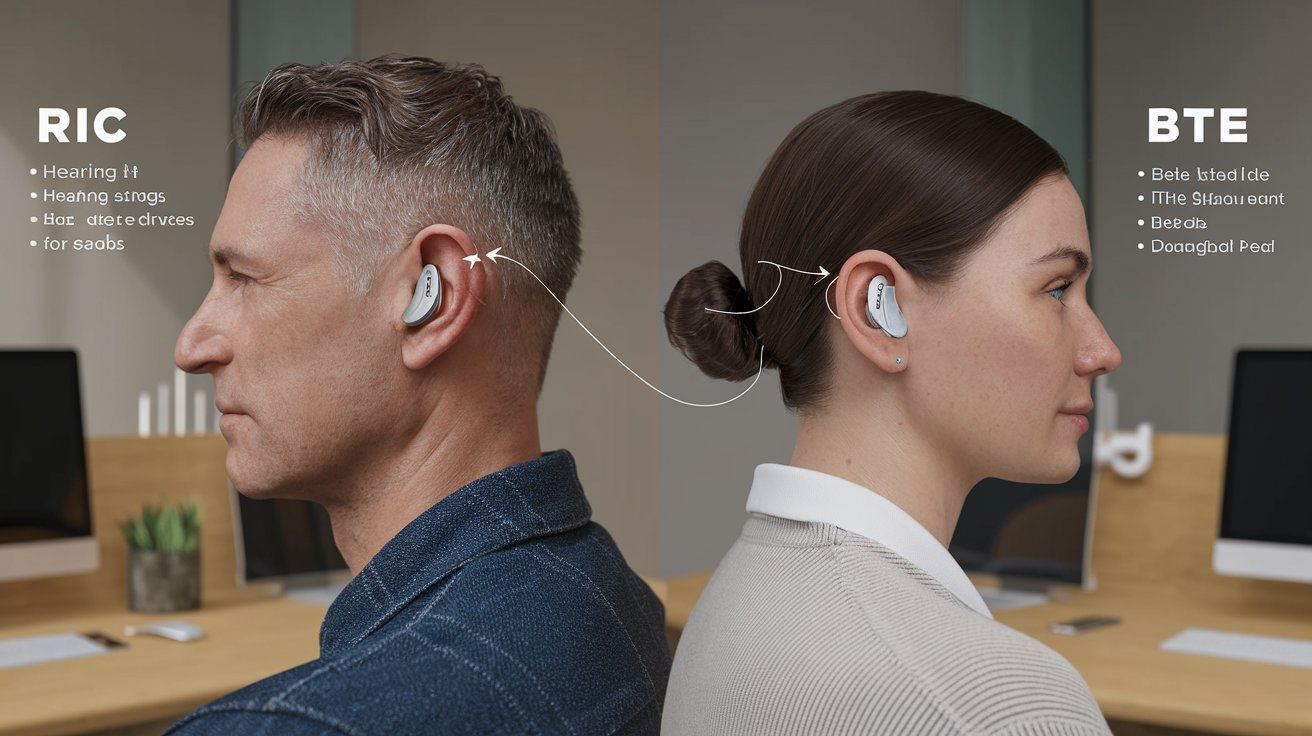
RIC hearing aids position the receiver directly in the ear canal, connected to the main processor behind the ear via a thin wire. This design creates a more natural sound pathway and reduces the occlusion effect that many users experience. The receiver processes sound waves directly at the eardrum, providing clearer audio transmission with minimal distortion.
BTE hearing aids house all electronic components, including the receiver, in the unit behind the ear. Sound travels through tubing into a custom earmold or dome placed in the ear canal. This traditional design offers maximum durability and power, making it ideal for severe to profound hearing loss cases where higher amplification levels are required.
Key Technical Differences Between RIC and BTE
The primary distinction lies in receiver placement, which affects sound quality, feedback management, and overall user experience. RIC devices separate the receiver from other components, reducing internal feedback and allowing for smaller behind-the-ear units. BTE models integrate all components, creating a more robust system capable of handling higher power requirements for severe hearing loss.
2025 Market Trends for RIC vs BTE Hearing Aids
According to 2024-2025 hearing aid market data, RIC hearing aids account for approximately 65% of new hearing aid fittings in the United States. This preference stems from improved cosmetic appeal, enhanced sound quality, and reduced wind noise. However, BTE models maintain strong market presence for pediatric users and individuals with severe hearing loss, representing about 25% of total sales.
Sound Quality and Performance Comparison
RIC hearing aids typically deliver superior sound quality due to the receiver’s proximity to the eardrum. This positioning creates a shorter acoustic pathway, reducing distortion and providing more natural sound reproduction. Users often report improved speech clarity and reduced occlusion effect, making conversations more comfortable and natural-sounding.
BTE hearing aids excel in power and amplification capabilities, making them the preferred choice for severe to profound hearing loss. The integrated design allows for larger speakers and more powerful amplifiers, delivering the high gain levels necessary for significant hearing impairment. Modern BTE models incorporate advanced digital processing to minimize feedback while maximizing amplification.
Frequency Response and Speech Recognition
RIC devices offer enhanced high-frequency response due to reduced acoustic coupling losses. This improvement translates to better consonant recognition and clearer speech understanding in noisy environments. The direct receiver placement eliminates much of the acoustic tube resonance that can affect sound quality in traditional BTE models.
Feedback Management and Wind Noise Reduction
The separated design of RIC hearing aids provides superior feedback management compared to BTE models. With the microphone behind the ear and receiver in the canal, the physical distance reduces acoustic feedback potential. Additionally, RIC devices experience less wind noise due to the microphone’s protected position behind the ear.
Comfort and Cosmetic Considerations
RIC hearing aids offer exceptional cosmetic appeal with their thin connecting wires and smaller behind-the-ear components. The discrete design makes them nearly invisible when worn, addressing many users’ concerns about hearing aid visibility. The lightweight construction and comfortable fit make them suitable for extended daily wear without discomfort.
BTE hearing aids, while more visible, provide maximum durability and reliability. The robust construction withstands daily wear and environmental factors better than RIC models. Modern BTE designs have become more streamlined and available in various colors to match hair tones, improving their cosmetic acceptance among users.
Hearing Loss Types and Suitability
RIC hearing aids work best for mild to moderate hearing loss, particularly when high-frequency hearing loss is prominent. The direct receiver placement in the canal maximizes high-frequency amplification while maintaining natural low-frequency hearing. This makes RIC devices ideal for age-related hearing loss and noise-induced hearing damage patterns common in adults.
BTE hearing aids remain the gold standard for severe to profound hearing loss, providing the power and amplification necessary for significant hearing impairment. They’re also preferred for children due to their durability and easy maintenance. BTE models accommodate various earmold types, allowing for custom fitting solutions for complex ear canal shapes.
Age-Related Hearing Loss Considerations
For presbycusis or age-related hearing loss, RIC hearing aids typically provide better outcomes due to their enhanced high-frequency response and reduced occlusion effect. The natural sound quality helps older adults adapt more quickly to amplification, improving overall satisfaction and usage rates.
Pediatric and Special Needs Applications
BTE hearing aids remain the preferred choice for children and special needs populations due to their durability, easy maintenance, and compatibility with assistive listening devices. The robust design withstands active lifestyles and frequent handling, while the larger size accommodates advanced features like telecoil and FM compatibility.
Maintenance and Longevity Comparison
RIC hearing aids require more frequent receiver replacements due to earwax exposure and moisture damage. The receiver’s position in the ear canal makes it vulnerable to cerumen buildup and humidity, potentially requiring replacement every 12-18 months. However, this modular design allows for easy in-office receiver changes without sending the entire unit for repair.
BTE hearing aids offer superior longevity and durability with average lifespans of 5-7 years compared to 4-5 years for RIC models. The protected component housing reduces moisture and debris exposure, minimizing repair needs. Maintenance primarily involves cleaning the earmold and tubing, which users can easily perform at home.
Cost Analysis and Insurance Coverage
RIC hearing aids typically cost between $1,500 to $4,000 per device in 2025, with premium models featuring advanced connectivity and noise reduction reaching higher price points. The ongoing receiver replacement costs add approximately $200-300 annually to the total ownership expense, making long-term costs comparable to BTE models despite lower initial prices.
BTE hearing aids range from $1,200 to $3,500 per device, offering better long-term value due to their durability and lower maintenance requirements. Insurance coverage varies, but many plans cover BTE models more readily for severe hearing loss cases. Medicare and Medicaid coverage improvements in 2024-2025 have increased accessibility for both RIC and BTE options.
Total Cost of Ownership Analysis
When calculating total cost of ownership over five years, BTE hearing aids often prove more economical due to lower maintenance requirements and longer component lifespan. RIC models may require 2-3 receiver replacements during this period, adding $600-900 to the total investment.
Insurance and Medicare Coverage Options
The 2024 Medicare Improvement Act expanded hearing aid coverage options for both RIC and BTE devices. Many private insurance plans now cover up to $2,500 per device every five years, with some plans offering annual hearing aid benefits. Veterans Affairs continues to provide comprehensive coverage for qualifying service members.
Professional Fitting and Adjustment Requirements
RIC hearing aids require precise receiver selection and dome fitting to optimize performance and prevent feedback. The variety of receiver powers and dome styles allows for customized fitting, but requires experienced audiologist expertise to achieve optimal results. Real-ear measurement becomes crucial for RIC fittings due to the direct coupling between receiver and eardrum.
BTE hearing aids demand custom earmold impressions and precise tubing length calculations for optimal fit and performance. The acoustic coupling through tubing requires careful consideration of tube diameter, length, and venting options. However, the traditional fitting process is well-established, with standardized protocols familiar to most hearing healthcare professionals.
Related video about ric vs bte
This video complements the article information with a practical visual demonstration.
Questions & Answers
What is the difference between Phonak BTE and RIC hearing aids?
Phonak BTE hearing aids house all components behind the ear with sound delivered through tubing, while RIC models place the receiver directly in the ear canal connected by a thin wire. RIC offers better sound quality and cosmetics, while BTE provides more power for severe hearing loss.
What is the disadvantage of a BTE hearing aid compared to RIC?
BTE hearing aids are more visible, may cause more occlusion effect, and can experience more wind noise. They also have longer acoustic pathways that can affect sound quality. However, they offer superior durability and power for severe hearing loss cases.
When should you use a RIC hearing aid over BTE?
RIC hearing aids are ideal for mild to moderate hearing loss, when cosmetic appeal is important, and for users experiencing occlusion effects with traditional hearing aids. They work best for high-frequency hearing loss patterns and active lifestyles requiring discrete amplification.
Which is better between RIC and BTE for severe hearing loss?
BTE hearing aids are generally better for severe to profound hearing loss because they can accommodate more powerful amplifiers and larger speakers. RIC models typically cannot provide sufficient gain for severe hearing impairment due to power and feedback limitations.
How long do RIC vs BTE hearing aids typically last?
BTE hearing aids typically last 5-7 years due to their protected component housing, while RIC hearing aids average 4-5 years. However, RIC receivers may need replacement every 12-18 months, adding to maintenance requirements but allowing for easy component updates.
Are RIC or BTE hearing aids better for first-time users?
RIC hearing aids are often better for first-time users due to their natural sound quality, reduced occlusion effect, and discrete appearance. The shorter adaptation period and improved speech clarity help new users adjust more quickly to amplification compared to traditional BTE models.
| Feature | RIC Hearing Aids | BTE Hearing Aids |
|---|---|---|
| Sound Quality | Superior natural sound, reduced occlusion | Good quality, more powerful amplification |
| Cosmetic Appeal | Excellent – nearly invisible | Moderate – more visible but improved designs |
| Durability | Good – receiver vulnerable to moisture | Excellent – protected components |
| Suitable Hearing Loss | Mild to moderate | Mild to profound |
| Average Lifespan | 4-5 years | 5-7 years |
| Maintenance | Regular receiver replacement needed | Lower maintenance requirements |