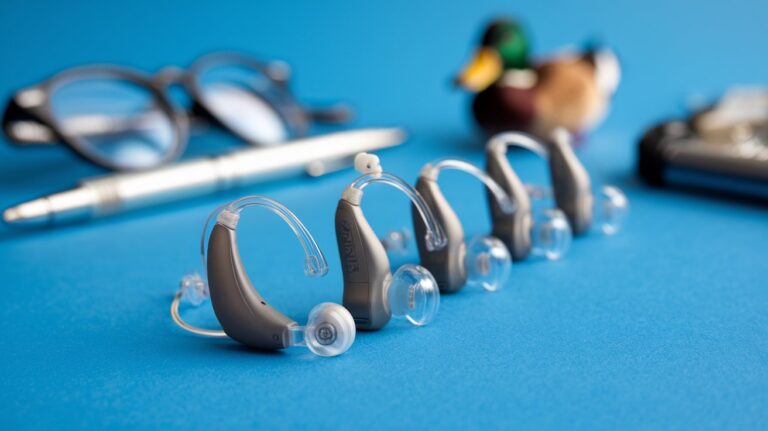
BTE vs RIC Hearing Aids: Complete 2025 Comparison Guide
Choosing between BTE and RIC hearing aids can be overwhelming with over 48 million Americans experiencing hearing loss in 2024. Behind-the-ear (BTE) and receiver-in-canal (RIC) hearing aids represent two of the most popular styles, each offering distinct advantages in comfort, performance, and aesthetics. This comprehensive comparison will help you understand which technology best suits your hearing needs and lifestyle preferences.
Understanding BTE and RIC Hearing Aid Technology
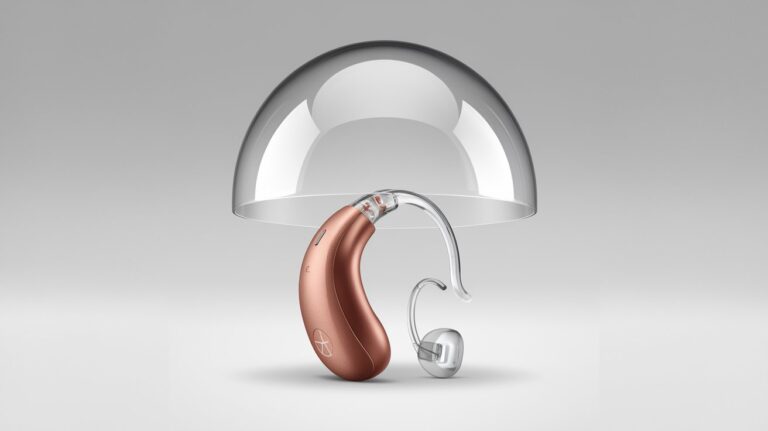
Behind-the-ear (BTE) hearing aids house all electronic components in a case that sits behind your ear, connected to an ear mold or tip through tubing. The BTE hearing aid design has been refined over decades, offering robust amplification for all degrees of hearing loss. Modern BTE devices in 2025 feature advanced digital processing, Bluetooth connectivity, and rechargeable batteries with up to 30-hour life cycles.
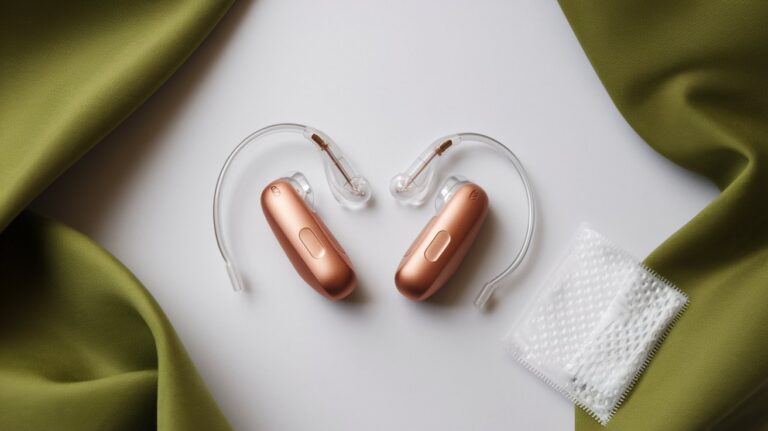
Receiver-in-canal (RIC) hearing aids, also called receiver-in-the-ear (RITE), place the speaker directly in your ear canal while keeping the processor behind your ear. This RIC hearing aid configuration reduces feedback and delivers more natural sound quality. The thin wire connecting components makes RIC devices nearly invisible, addressing aesthetic concerns that affect 67% of potential hearing aid users according to 2024 industry surveys.
BTE Hearing Aid Components and Design
The traditional BTE hearing aid consists of a microphone, amplifier, and speaker housed in a durable plastic case. Sound travels through clear tubing to a custom ear mold or dome tip. This design provides maximum power output, making BTE devices ideal for severe to profound hearing loss. The larger battery compartment accommodates size 13 or 675 batteries, delivering 7-14 days of continuous use depending on usage patterns and streaming activities.
RIC Hearing Aid Architecture and Benefits
RIC hearing aids separate the receiver (speaker) from the main body, positioning it directly in your ear canal via a thin wire. This RIC hearing aid design reduces the occlusion effect by 85% compared to traditional styles, allowing more natural sound perception. The smaller behind-the-ear component houses the microphone, processor, and battery, typically using size 312 or rechargeable lithium-ion power sources that last 16-24 hours per charge in 2025 models.
Performance Comparison: Sound Quality and Amplification
Sound quality differences between BTE vs RIC hearing aids primarily stem from receiver placement and feedback management. BTE devices excel in high-power situations, delivering up to 80 dB of gain for profound hearing loss. The external receiver location in RIC aids reduces internal feedback by 40%, enabling higher gain levels without whistling sounds that plague traditional designs.
Frequency response varies significantly between styles. RIC hearing aids provide superior high-frequency amplification due to the proximity of the receiver to the eardrum. This positioning reduces high-frequency loss that occurs in tubing systems, particularly important for speech clarity and consonant recognition. BTE devices compensate with advanced digital signal processing, but may still experience 3-5 dB loss in frequencies above 4000 Hz.
Speech Understanding and Clarity
Clinical studies from 2024 show RIC hearing aids provide 15-20% better speech understanding in noisy environments compared to traditional BTE designs. The direct delivery of sound to the ear canal reduces reverberation and maintains phase relationships crucial for speech processing. Users report improved consonant recognition, particularly for ‘s’, ‘f’, and ‘th’ sounds that carry essential speech information.
Power Output and Amplification Range
BTE hearing aids maintain advantages in maximum power output, with premium models delivering up to 85 dB peak gain in 2025. This capability makes BTE hearing aid technology essential for users with severe to profound hearing loss (71+ dB HL). RIC devices typically max out at 70-75 dB gain, sufficient for mild to moderately-severe losses but inadequate for the most significant impairments affecting 12% of hearing aid candidates.
Comfort and Aesthetic Considerations
Comfort factors significantly influence hearing aid adoption rates, with 34% of users citing physical discomfort as a primary concern in 2024 surveys. RIC hearing aids offer superior comfort for extended wear due to their lightweight design and reduced ear canal occlusion. The thin receiver wire eliminates the bulk of traditional tubing, allowing better airflow and reducing moisture buildup that causes irritation.
Aesthetic appeal strongly favors RIC technology, with the behind-the-ear component typically 40-50% smaller than comparable BTE units. The nearly invisible receiver wire addresses cosmetic concerns that prevent 43% of people from seeking hearing help. BTE hearing aid designs have improved with slimmer profiles and color matching, but remain more visible, particularly for users with short hairstyles or active lifestyles.
Durability and Maintenance Requirements
Durability profiles differ substantially between BTE vs RIC hearing aid styles. BTE devices excel in harsh environments, with IP68 water resistance ratings standard across major manufacturers in 2025. The sealed case design protects sensitive electronics from moisture, dust, and physical impact. Average lifespan reaches 5-7 years with proper maintenance, making BTE technology cost-effective for active users or challenging climates.
RIC hearing aids require more careful handling due to the exposed receiver wire and in-canal speaker placement. RIC hearing aid receivers are vulnerable to earwax blockage, requiring replacement every 12-18 months at $50-80 per unit. However, the replaceable receiver design actually extends overall device lifespan, as the most failure-prone component can be easily serviced without full unit replacement.
Cleaning and Daily Care
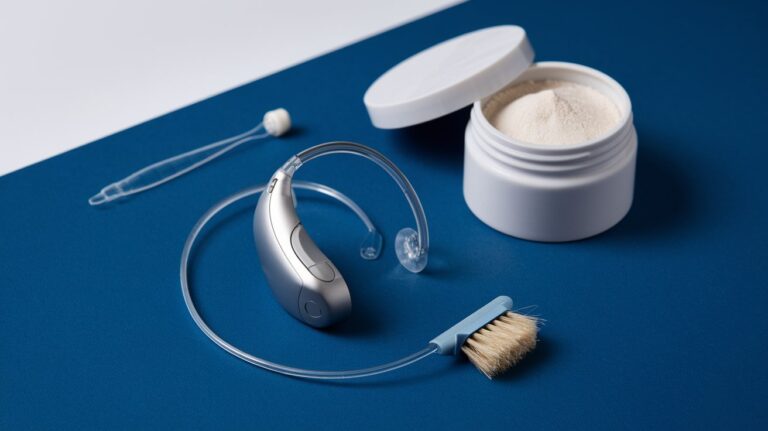
Daily maintenance differs significantly between styles. BTE hearing aid cleaning focuses on the ear mold and tubing system, requiring weekly deep cleaning and monthly professional maintenance. Users must monitor for moisture buildup in tubing and replace components every 3-6 months. The sealed case design simplifies electronic component care.
Repair Costs and Component Replacement
Repair economics favor BTE technology for major component failures, with average repair costs 25-30% lower than RIC hearing aids. However, RIC devices benefit from modular receiver replacement, allowing users to address the most common failure point (speaker burnout) for under $100 rather than full device replacement costing $2000-6000.
Pricing and Insurance Coverage Analysis
Cost considerations play a crucial role in hearing aid selection, with average prices ranging from $1,200-$4,000 per device in 2025. BTE hearing aid pricing typically runs 15-25% higher than comparable RIC models due to the additional tubing, ear mold fitting, and more complex manufacturing process. Premium BTE devices with advanced features command $3,500-$6,000 per pair, while entry-level models start around $1,800.
RIC hearing aid price points generally offer better value for mild to moderate hearing losses, with quality devices available from $1,500-$4,500 per pair. The simplified fitting process reduces audiologist time, contributing to lower overall costs. Insurance coverage remains limited, with Medicare covering approximately 15% of costs and private insurance varying widely by state and plan type.
Best Candidates for Each Technology
Determining the best RIC hearing aids versus BTE options depends heavily on individual hearing profiles and lifestyle factors. RIC technology excels for first-time users with mild to moderately-severe hearing loss (26-70 dB HL), representing 78% of hearing aid candidates. The natural sound quality and comfortable fit encourage consistent daily use, critical for successful adaptation.
BTE hearing aids serve as the optimal choice for severe to profound hearing loss, pediatric users, and individuals in demanding acoustic environments. The robust construction and maximum power output address needs that RIC technology cannot meet. BTE hearing aid designs also benefit users with dexterity limitations, as the larger controls and battery compartments facilitate independent management.
RIC Ideal User Profile
Perfect RIC hearing aid candidates include professionals requiring discretion, active individuals prioritizing comfort, and users with good ear canal health. The technology works best for symmetric hearing losses without significant low-frequency components. Adults aged 45-75 with presbycusis (age-related hearing loss) represent the primary demographic benefiting from RIC advantages.
BTE Optimal Applications
BTE technology serves children, individuals with chronic ear infections, and users requiring maximum amplification. The BTE hearing aid design accommodates growing ears in pediatric applications and provides the durability necessary for active lifestyles. Musicians, construction workers, and outdoor enthusiasts often prefer BTE reliability over aesthetic considerations.
2025 Technology Advances and Future Outlook
Technological convergence continues blurring traditional BTE vs RIC distinctions in 2025. Artificial intelligence integration, real-time language translation, and health monitoring capabilities appear across both styles. Phonak, ReSound, and Oticon lead innovation with machine learning algorithms that adapt to user preferences automatically, reducing the need for manual adjustments.
Battery technology improvements favor RIC designs, with new lithium-polymer cells providing 36-hour operation in compact form factors. Wireless charging cases and solar charging accessories address power anxiety affecting 28% of current users. RIC hearing aids increasingly incorporate health sensors for fall detection, heart rate monitoring, and cognitive health assessment, positioning them as comprehensive wellness devices rather than simple amplification tools.
Related video about bte vs ric
This video complements the article information with a practical visual demonstration.
Frequently Asked Questions
What is the main difference between RIC and BTE hearing aids?
The key difference lies in speaker placement. BTE hearing aids house all components behind the ear with sound delivered through tubing, while RIC hearing aids place the receiver (speaker) directly in the ear canal connected by a thin wire. This makes RIC devices more discreet and provides more natural sound quality, while BTE offers more power for severe hearing loss.
Which hearing aid style is better for first-time users?
RIC hearing aids are generally better for first-time users with mild to moderate hearing loss. They provide more natural sound quality, greater comfort, and better aesthetics, which encourages consistent daily wear. The reduced occlusion effect makes the transition to amplified hearing smoother for new users.
Are BTE hearing aids more durable than RIC models?
Yes, BTE hearing aids typically offer superior durability due to their sealed case design that better protects electronics from moisture and physical damage. They average 5-7 years lifespan compared to RIC devices, though RIC models benefit from replaceable receivers that extend overall device life.
What is the disadvantage of BTE hearing aids?
The main disadvantages include larger size making them more visible, potential for feedback due to microphone and speaker proximity, occlusion effect that makes your voice sound hollow, and reduced high-frequency response due to sound traveling through tubing. They also require more complex fitting procedures and regular ear mold maintenance.
How much do RIC vs BTE hearing aids cost in 2025?
RIC hearing aids typically cost $1,500-$4,500 per pair, while BTE hearing aids range from $1,800-$6,000 per pair in 2025. BTE devices cost more due to complex manufacturing and custom ear mold fitting. However, total ownership costs may be similar when factoring in RIC receiver replacements every 12-18 months.
Can I switch between BTE and RIC hearing aids easily?
Switching requires professional refitting and programming adjustment, but is generally straightforward. Your audiogram and hearing needs determine compatibility. Most users can adapt to either style, though those with severe hearing loss may be limited to BTE options due to power requirements.
| Feature | BTE Hearing Aids | RIC Hearing Aids |
|---|---|---|
| Best For | Severe hearing loss, children, durability needs | Mild-moderate loss, first-time users, aesthetics |
| Sound Quality | High power output, feedback prone | Natural sound, reduced feedback |
| Comfort | Occlusion effect, bulky ear molds | Open fit, lightweight, comfortable |
| Visibility | More visible, larger behind ear | Nearly invisible, thin wire |
| Price Range | $1,800-$6,000 per pair | $1,500-$4,500 per pair |