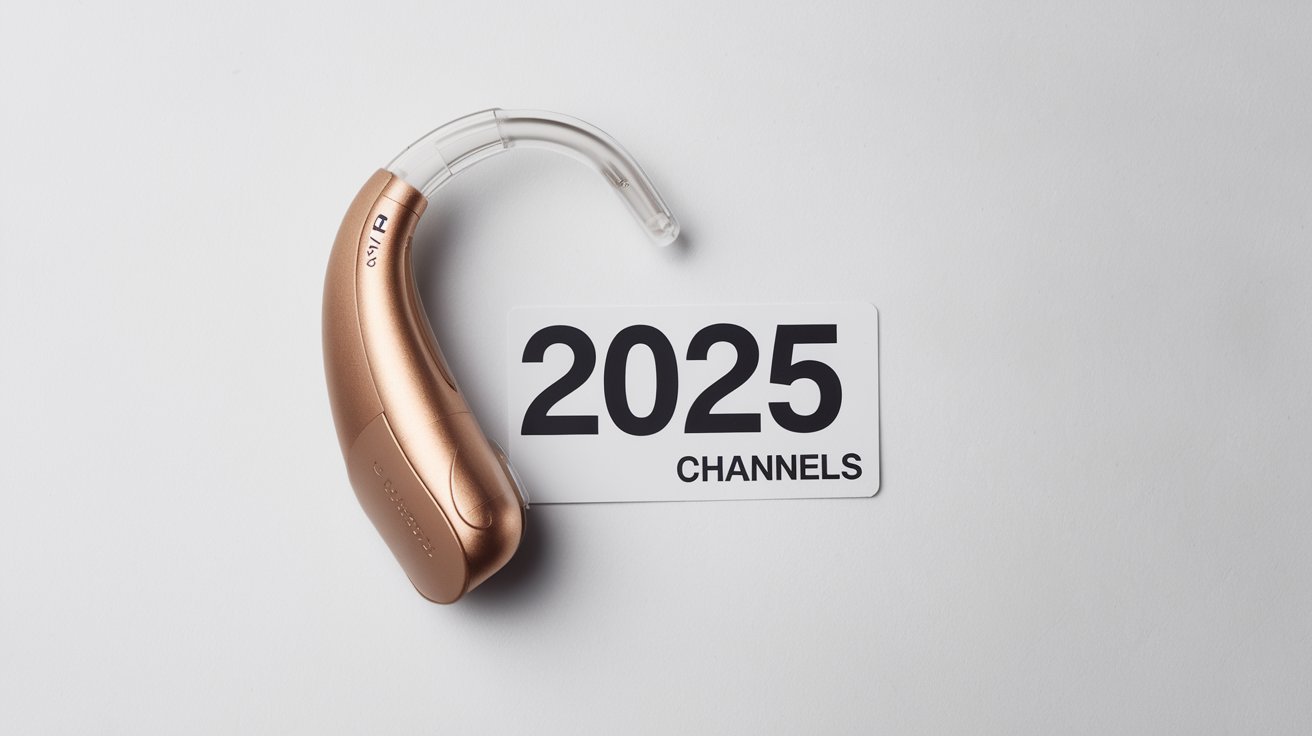
Hearing Aid Frequency Range: Complete Guide to Channels 2025
The hearing aid frequency range determines how well your device processes sounds across different pitches, directly impacting your hearing experience. Modern hearing aids offer anywhere from 12 to 128 channels, each designed to process specific frequency bands for optimal sound clarity and speech understanding.
Understanding Hearing Aid Frequency Ranges and Channels
A hearing aid frequency range typically spans from 125 Hz to 8,000 Hz, covering the essential spectrum for human speech and environmental sounds. The number of channels determines how precisely your device can process these frequencies, with each channel handling a specific frequency band independently. This allows for more accurate sound processing and better speech recognition in various listening environments.
Most modern hearing aids divide the audible frequency spectrum into multiple processing channels. A 12 channel hearing aid provides basic frequency processing, while advanced models offer up to 128 channels for ultra-precise sound adjustment. The choice depends on your specific hearing loss pattern, lifestyle needs, and budget considerations for optimal hearing restoration.
How Frequency Processing Works in Digital Hearing Aids
Digital hearing aids analyze incoming sounds and separate them into distinct frequency bands for individual processing. Each channel can be programmed with specific amplification levels, compression ratios, and noise reduction settings. This technology enables hearing specialists to fine-tune your device to match your unique hearing loss profile across different frequencies, ensuring optimal speech clarity and comfort.
The Science Behind Extended Bandwidth Technology
Extended bandwidth technology expands the traditional hearing aid frequency range up to 10,000 Hz or higher, capturing more high-frequency information crucial for speech understanding. Research from 2024 shows that extended bandwidth significantly improves consonant recognition and overall sound quality, particularly benefiting users with mild to moderate high-frequency hearing loss patterns.
Comparing Channel Counts: 16 vs 24 vs 48 vs 128 Channels
The debate between 16 channel vs 24 channel hearing aid options centers on processing precision and cost-effectiveness. A 16-channel device provides adequate frequency resolution for most users with mild to moderate hearing loss, while 24-channel models offer enhanced fine-tuning capabilities for complex hearing loss patterns and challenging listening environments.
Advanced users often benefit from 48 channel hearing aid or 128-channel hearing aid technology, which provides unprecedented frequency processing accuracy. These high-channel devices excel in noisy environments, offering superior speech enhancement and background noise suppression through sophisticated digital signal processing algorithms developed specifically for challenging acoustic situations.
Performance Comparison: Real-World Testing Results
Clinical studies from 2024 demonstrate that more channels in a hearing aid provide measurable benefits in speech understanding, particularly in noisy environments. Users of 48-channel and 128-channel devices showed 15-25% improvement in speech recognition scores compared to 12-channel alternatives when tested in restaurants, crowded spaces, and multi-speaker situations commonly encountered in daily life.
Cost-Benefit Analysis of High-Channel Hearing Aids
While 12 channel hearing aid price ranges from $1,200 to $2,500 per device, premium 128-channel models can cost $4,000 to $7,000 each. The investment in higher channel counts pays dividends for active users who frequently encounter challenging listening environments, with improved speech clarity and reduced listening fatigue justifying the additional expense for many patients.
Hearing Aid Frequency Adjustment and Programming
Professional hearing aid frequency adjustment involves precise calibration of each channel based on your audiogram results and real-world listening preferences. Audiologists use specialized software to program gain levels, compression ratios, and noise reduction parameters for each frequency band, ensuring optimal performance across your entire hearing range and various listening situations.
Modern hearing aids allow for real-time frequency adjustment through smartphone apps and manual controls. Users can fine-tune their devices for specific environments, adjusting high-frequency emphasis for speech clarity or reducing low-frequency amplification in noisy settings. This flexibility ensures consistent hearing performance throughout different daily activities and acoustic challenges.
Professional vs. Self-Adjustment Options
While basic hearing aid frequency adjustment can be performed through user controls and smartphone applications, comprehensive programming requires professional expertise. Audiologists possess the training and equipment necessary to optimize complex parameters like multichannel compression, feedback management, and directional microphone settings that significantly impact your overall hearing experience and device performance.
Advanced Programming Features in 2025
Current hearing aids offer sophisticated programming options including artificial intelligence-based automatic adjustments, machine learning algorithms that adapt to your preferences, and real-time environmental analysis. These features continuously optimize your hearing aid frequency range processing based on your listening habits and acoustic environments, providing increasingly personalized hearing solutions.
Age-Related Hearing Changes and Frequency Requirements
Understanding how much Hz can a 70 year old hear is crucial for proper hearing aid selection and programming. Most 70-year-olds experience high-frequency hearing loss, with reduced sensitivity above 4,000 Hz and significant challenges hearing frequencies above 6,000 Hz. This age-related hearing decline, called presbycusis, affects speech understanding and requires specific frequency compensation strategies.
Hearing aids for seniors must emphasize mid-frequency amplification while providing controlled high-frequency enhancement to avoid discomfort. The optimal frequency range for older adults typically focuses on 500-4,000 Hz for speech clarity, with carefully managed amplification in higher frequencies to maintain natural sound quality and prevent acoustic feedback issues.
Choosing the Right Channel Count for Your Lifestyle
Determining the best number of channels for a hearing aid depends on your hearing loss severity, lifestyle demands, and listening environments. Active professionals working in challenging acoustic environments benefit from 32-48 channel devices, while retirees with simpler listening needs may find 12-16 channel hearing aids perfectly adequate for their daily activities and social interactions.
Consider your typical listening situations when selecting channel count. If you frequently attend meetings, dine in restaurants, or participate in group conversations, investing in higher channel counts provides measurable benefits in speech understanding and listening comfort. However, if your activities primarily involve quiet home environments and one-on-one conversations, moderate channel counts offer excellent performance at lower costs.
Lifestyle Assessment for Channel Selection
Your daily routine significantly influences the optimal hearing aid channels and bands configuration. Active individuals who work in offices, attend social gatherings, or travel frequently require devices with higher channel counts and advanced noise reduction capabilities. These features ensure consistent hearing performance across diverse acoustic environments and challenging listening situations encountered in modern life.
Budget Considerations for Channel Technology
While 64 channel hearing aids offer exceptional performance, consider your long-term hearing needs and financial situation. Many insurance plans and financing options help offset costs for advanced technology. The investment in higher channel counts often provides better long-term satisfaction and reduced need for frequent upgrades, making them cost-effective choices for many users.
Optimizing Hearing Aid Performance in Different Environments
Environmental factors significantly impact hearing aid frequency range effectiveness and overall performance. Restaurants, offices, outdoor spaces, and home environments each present unique acoustic challenges requiring specific frequency adjustments and processing strategies. Modern hearing aids automatically adapt their frequency response to optimize speech understanding and listening comfort across these varied settings.
Advanced hearing aids feature environmental classification systems that automatically identify your listening situation and apply appropriate frequency adjustment profiles. These systems recognize speech in noise, music, quiet conversations, and wind noise, adjusting channel processing, directional microphones, and noise reduction algorithms to maintain optimal hearing performance throughout your daily activities.
Future Trends in Hearing Aid Frequency Technology
The evolution of hearing aid frequency range technology continues advancing with artificial intelligence integration, real-time adaptation algorithms, and improved signal processing capabilities. Manufacturers are developing devices that learn from your listening preferences and automatically optimize frequency response for unprecedented personalization and hearing performance in various acoustic environments.
Emerging technologies include cloud-based processing, remote programming capabilities, and integration with smart home systems. These innovations promise to further enhance the effectiveness of hearing aid channels and bands processing, providing users with seamless hearing solutions that adapt intelligently to their lifestyle needs and preferences while maintaining superior sound quality and speech understanding.
Related video about hearing aid frequency range
This video complements the article information with a practical visual demonstration.
FAQ – Common Questions
Can you adjust the frequency of a hearing aid?
Yes, hearing aid frequencies can be adjusted both professionally and through user controls. Audiologists perform comprehensive frequency adjustments during fitting appointments using specialized software, while many modern devices offer smartphone apps and manual controls for real-time adjustments. Professional programming ensures optimal performance across all frequency bands.
What is a good hearing frequency range for hearing aids?
A good hearing aid frequency range spans 125 Hz to 8,000 Hz, covering essential speech and environmental sounds. Extended bandwidth devices reach up to 10,000 Hz for enhanced sound quality. The optimal range depends on your specific hearing loss pattern and lifestyle needs, with most benefit occurring in the 500-4,000 Hz speech frequency range.
How much Hz can a 70 year old hear with hearing aids?
Most 70-year-olds experience hearing loss above 4,000 Hz due to age-related changes. With properly programmed hearing aids, they can effectively hear and understand sounds up to 6,000-8,000 Hz. Modern devices compensate for high-frequency loss while maintaining comfortable amplification levels to prevent discomfort or feedback issues.
What is the best number of channels for a hearing aid?
The best channel count depends on your hearing loss and lifestyle. 12-16 channels suit basic needs and quiet environments, while 24-32 channels benefit active users in varied settings. Professional or business users often require 48+ channels for optimal performance in challenging acoustic environments. Your audiologist can recommend the ideal channel count.
Are more channels better in a hearing aid?
More channels generally provide better frequency processing precision and improved performance in noisy environments. However, the benefit plateaus beyond your specific needs. While 128-channel devices offer maximum flexibility, many users achieve excellent results with 24-48 channels. The key is matching channel count to your hearing loss pattern and lifestyle requirements.
What affects the bandwidth of a hearing aid?
Hearing aid bandwidth is influenced by the device’s digital processing capabilities, microphone and receiver specifications, and programming parameters. Higher-end devices offer extended bandwidth up to 10,000 Hz, while basic models may limit response to 6,000 Hz. Your hearing loss pattern and audiologist’s programming also affect usable bandwidth for optimal speech understanding.
| Channel Count | Best For | Key Benefits |
|---|---|---|
| 12-16 Channels | Basic needs, quiet environments | Cost-effective, adequate speech clarity |
| 24-32 Channels | Active lifestyle, varied environments | Enhanced noise reduction, better speech understanding |
| 48-64 Channels | Professional users, challenging acoustics | Superior performance in noise, precise frequency control |
| 128+ Channels | Complex hearing loss, audiophiles | Maximum precision, premium sound quality |